
Boghall House Chapter Two | Planning Approval
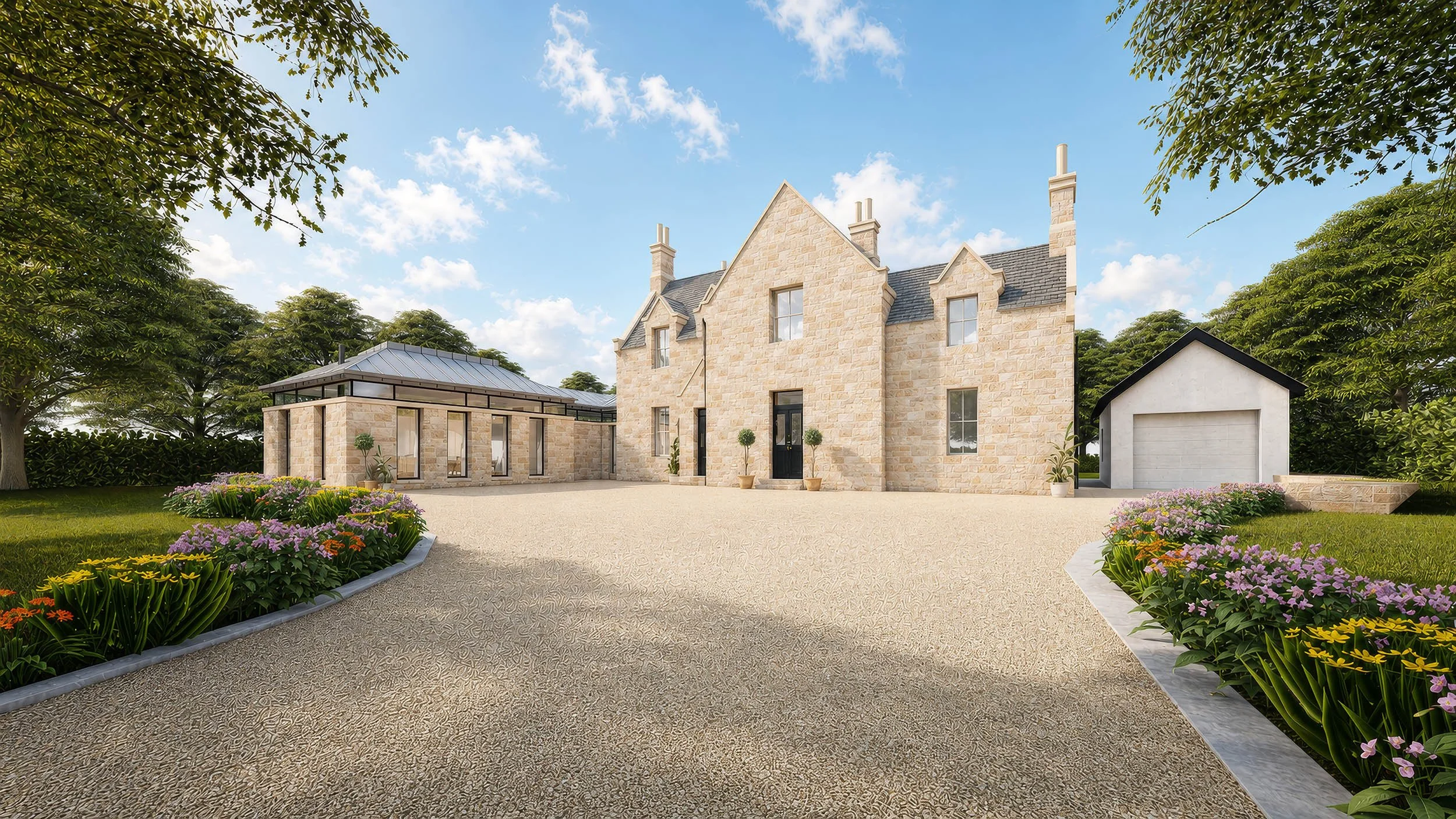
We are pleased to have secured planning permission for a new orangery at Boghall House in Linlithgow, on behalf of returning clients.
The application was approved within five weeks of validation. It represents the next phase of work at the house, following the refurbishment and extension of its former coal store we completed in 2022.
Boghall House is an unlisted but distinctive traditional sandstone home on the eastern edge of Linlithgow. Although it sits outwith the town’s conservation areas, it remains an important surviving fragment of the area’s former rural character: a well-proportioned late nineteenth-century villa with sandstone walls, traditional slate roofs, timber sash-and-case windows and prominent gables and chimneys.
The new project has been designed to support the long-term use of the house as a family home, providing a generous and flexible living space for everyday life, entertaining and time with family.
A continuing relationship with the house.
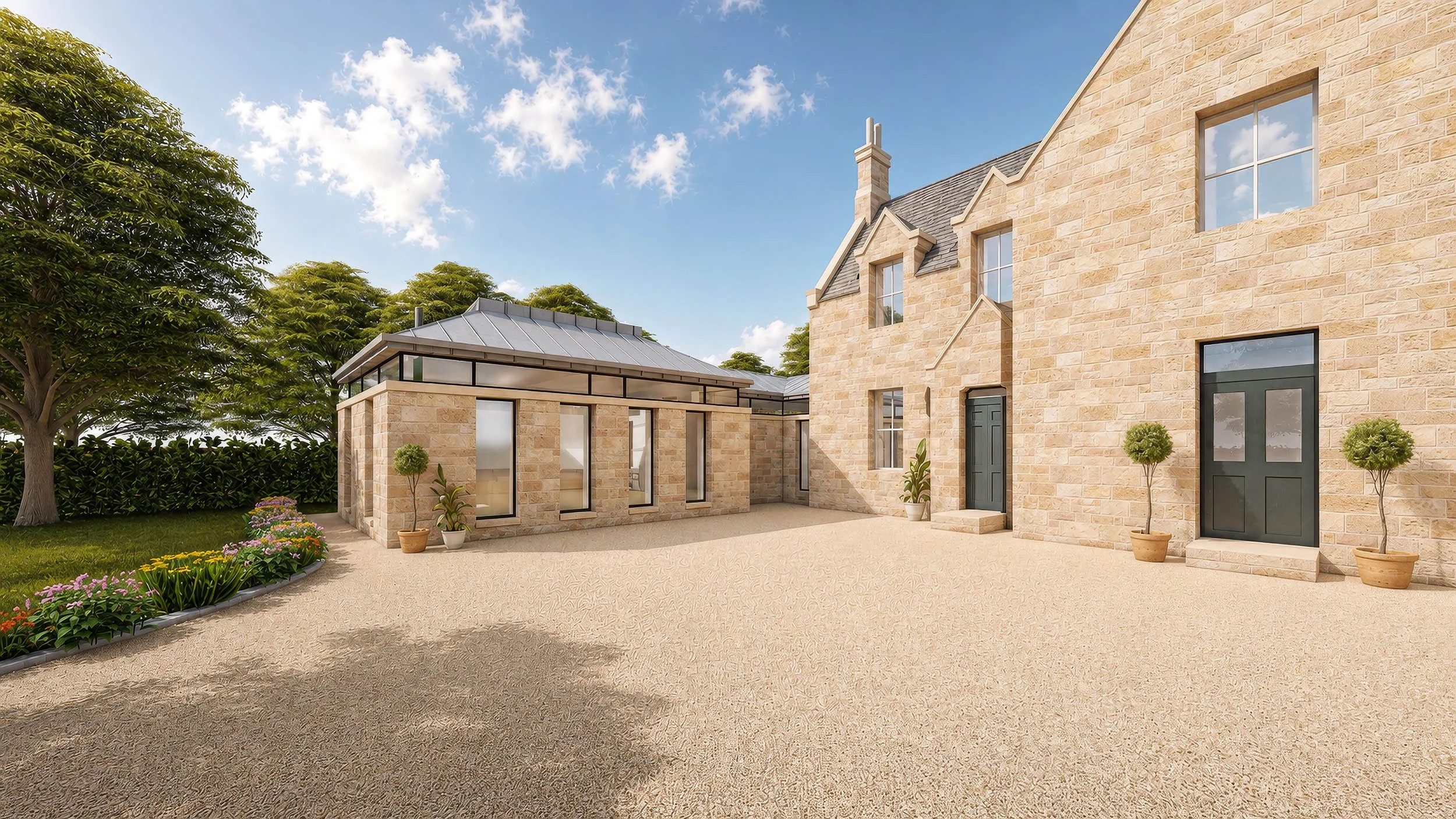
Our earlier work at Boghall House involved the conversion of a former coal store into a new home office and everyday entrance space. That intervention retained the existing stone walls while introducing a lightweight hipped zinc roof and glazed junctions to distinguish clearly between old and new.
The newly approved orangery develops this architectural language further.
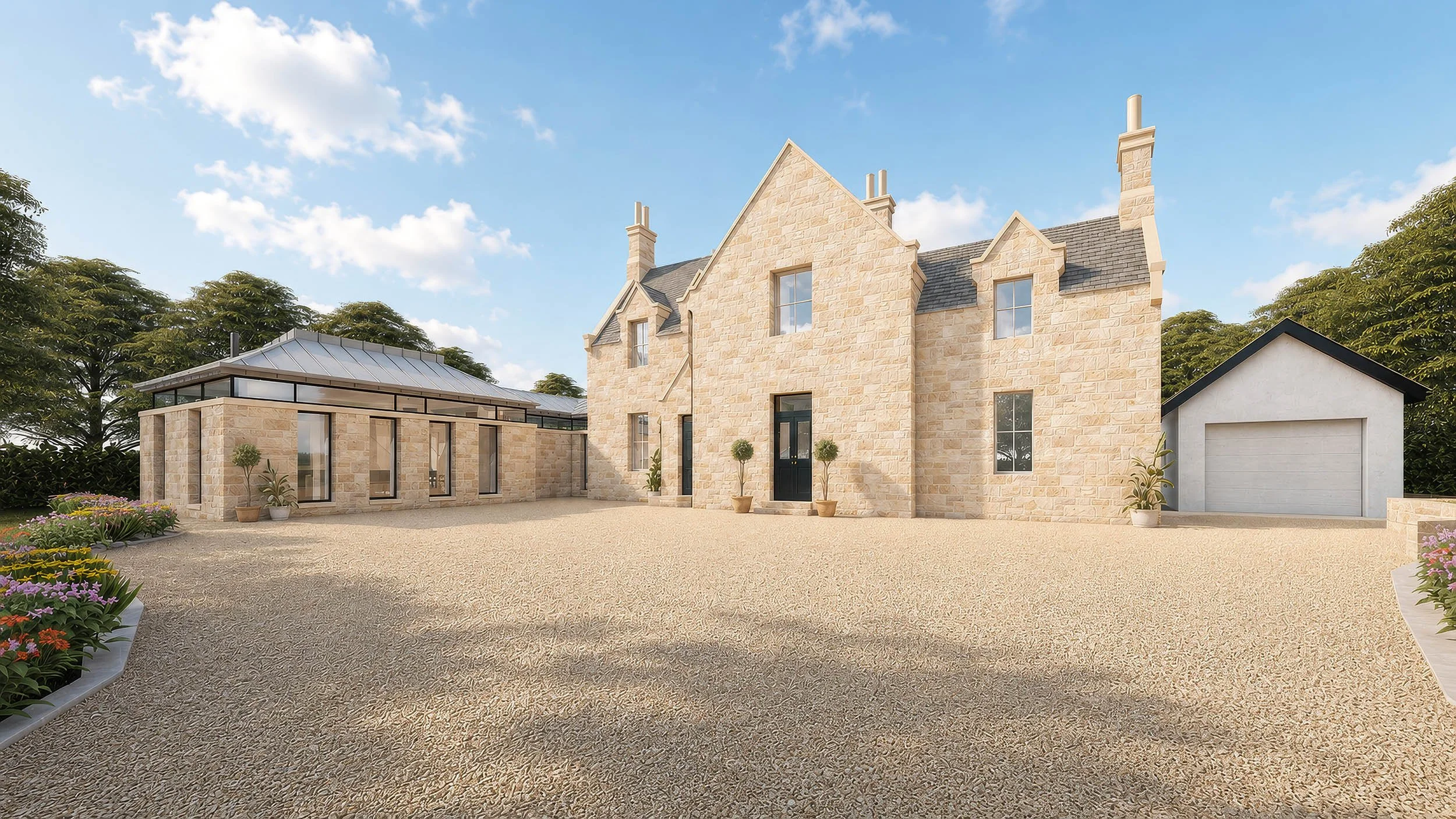
Rather than seeking to imitate the original house, the extension is designed as a contemporary addition that sits comfortably alongside it. Natural sandstone walling, high-performance glazing, clerestory windows and a restrained zinc roof create a material palette that relates to the existing building and the previous extension while remaining clearly of its time.
A carefully placed new living space.
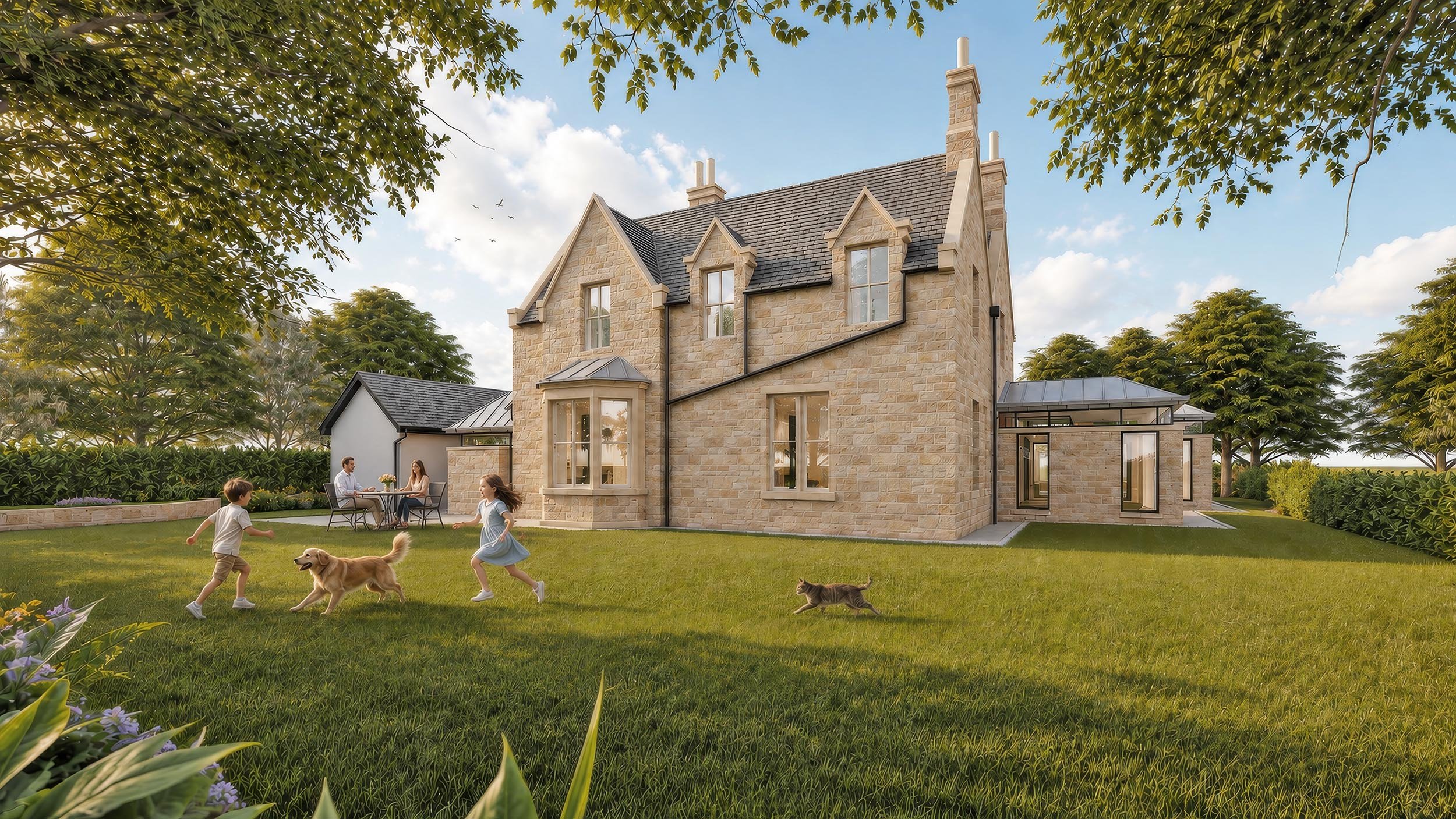
The orangery is positioned within an underused part of the garden, on the entrance side of the property. Although this is technically towards the front of the house, Boghall House does not sit within a conventional street frontage. It is set within its own mature landscaped grounds and accessed from a private road.
The proposal helps define a more coherent entrance forecourt while retaining the principal elevations and distinctive character of the original house.
Its connection to the existing building is deliberately limited. The cill of a single existing window will be lowered to create access to the new accommodation, avoiding unnecessary intervention to the traditional sandstone fabric. This allows the original house to remain legible, while ensuring that the new extension could be removed in principle in the future without wider harm to the building.
Contemporary design in a traditional setting.
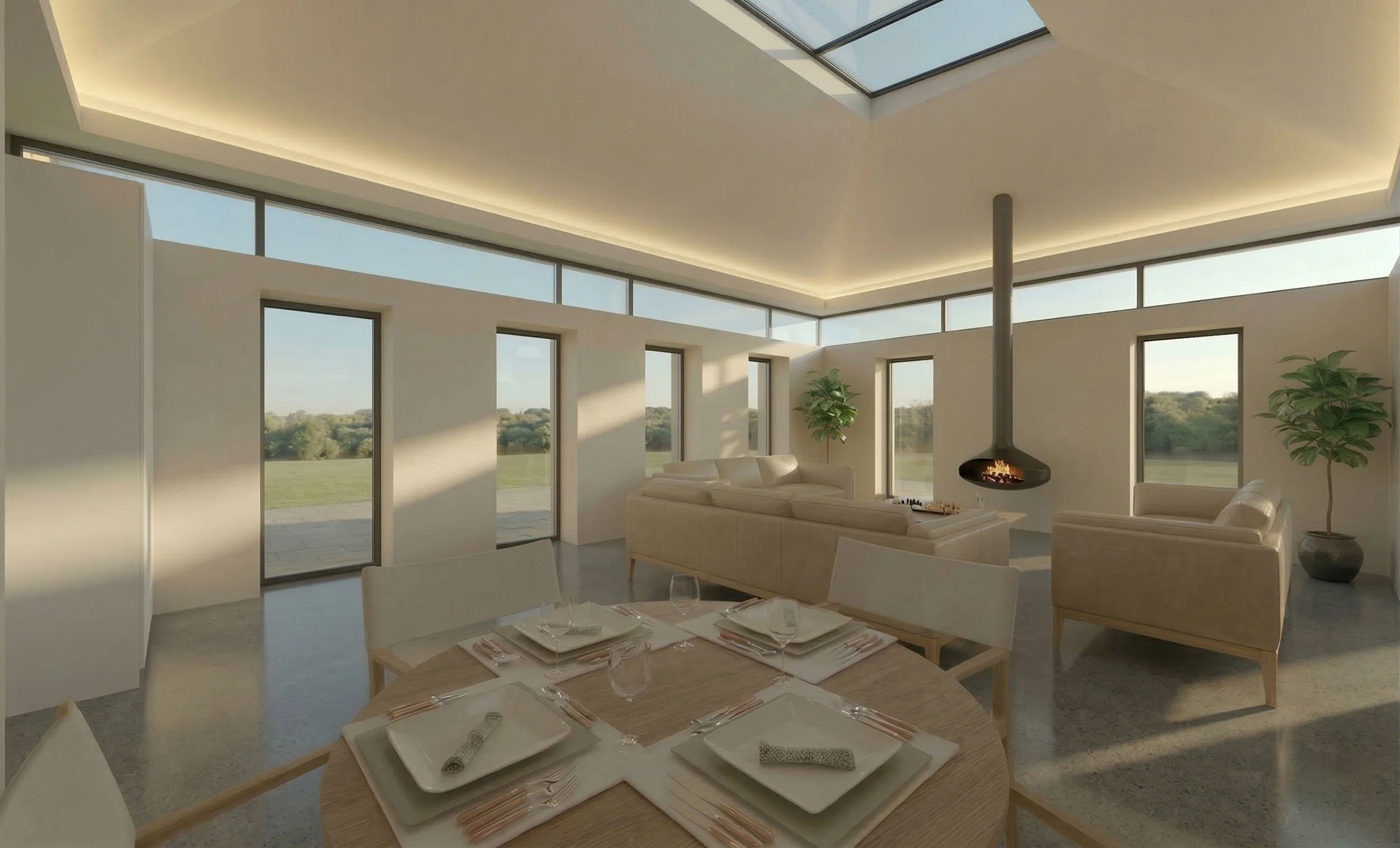
The new orangery is single-storey and subsidiary to the main house. Its hipped roof form reduces its apparent scale from outside while creating a generous, light-filled internal volume.
Internally, the space will provide a comfortable new room overlooking the garden, with tall glazed openings, clerestory glazing and rooflights bringing daylight deep into the plan. The highly insulated structure and underfloor heating will also provide an efficient, comfortable living space throughout the year.
The design takes cues from the proportions and rhythm of the existing house without reproducing historic detailing. Vertical openings and a restrained palette allow the extension to sit alongside the sandstone villa with confidence and respect.
Planning permission granted.
The approval is a positive outcome for our clients and gives certainty for the next stage of the project.
It also demonstrates that contemporary additions can work well with traditional buildings when they are carefully located, proportioned and detailed. The aim has been to protect what gives Boghall House its character, while allowing it to continue evolving as a much-loved family home.
Thoughtful architecture for homes, heritage and managing change.