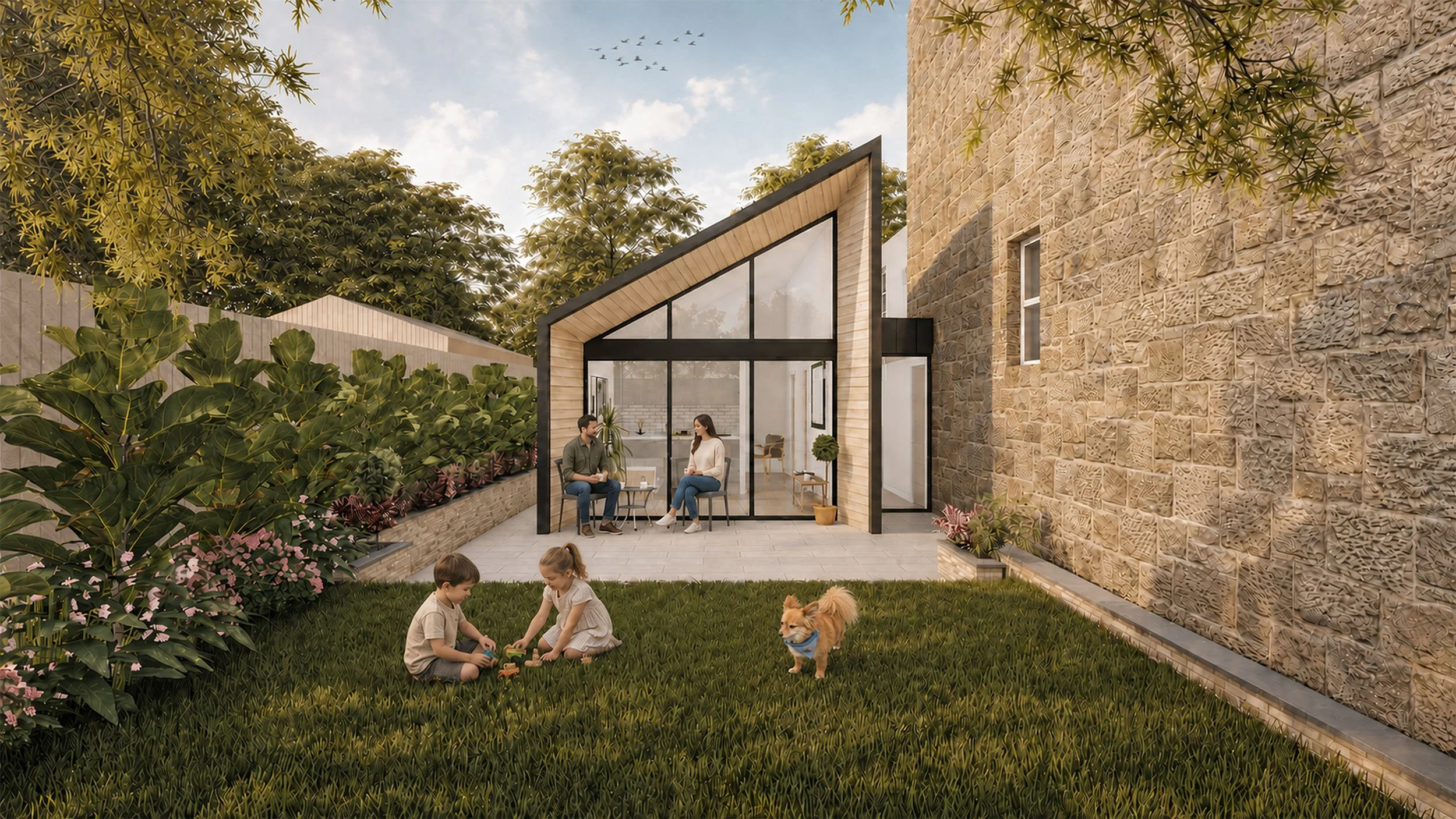
Contemporary Extension in Dundee’s West End Lanes submitted for Planning
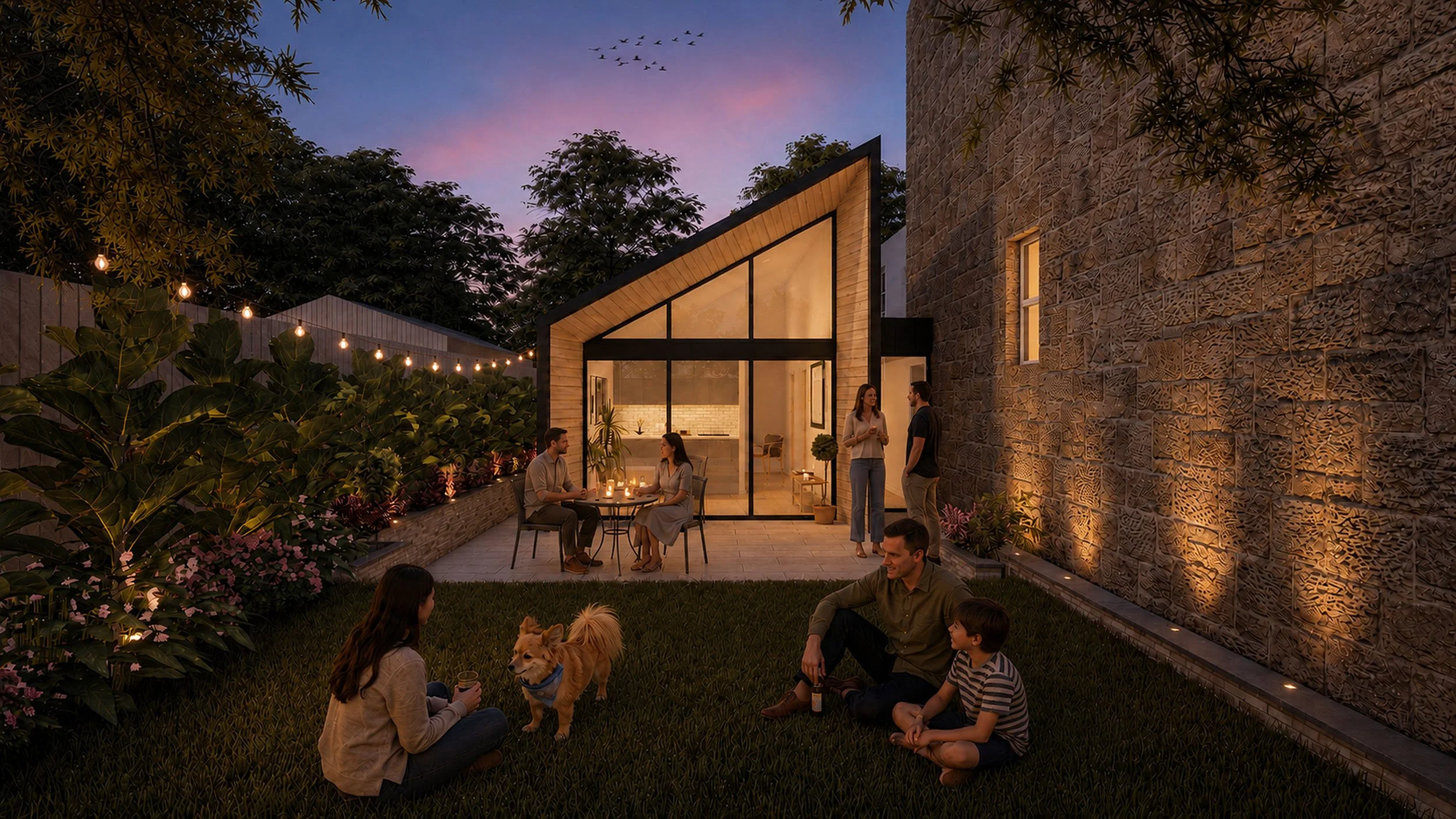
We have recently submitted a planning application for a modest contemporary extension to a traditional sandstone home in Dundee’s West End Lanes Conservation Area.
The project sits within one of Dundee’s most distinctive urban settings: a network of narrow lanes, garden plots, stone boundary walls, traditional houses and former industrial backland sites between Perth Road and Magdalen Green. It is a part of the city where character comes from layers of use, enclosure, planting, stonework and glimpsed views towards the River Tay.
The existing house is not listed, but it contributes positively to the conservation area. Its principal townscape value lies in its traditional street-facing elevation, sandstone construction, slated roof, boundary walls and relationship with the lane.
The rear of the property is different. It is more private, more altered and has historically accommodated ancillary built form. That distinction shaped the design approach.
A conservation-led approach to change.
Working in a conservation area does not mean avoiding change. It means understanding where change can happen, what should be protected and how new work should relate to what already exists.
For this project, the proposal concentrates change within the rear garden setting, away from the principal elevation and public street edge. The extension is designed as a single-storey garden addition, subordinate to the existing house, whilst its expression is clearly contemporary.
Rather than imitating the sandstone building, the new work uses a simple architectural language: black-framed glazing, timber lining, standing seam roofing and a restrained material palette. The intention is to let the original house remain legible while allowing the new addition to have its own identity reflecting today’s trade skills and construction practices.
Connecting house and garden.
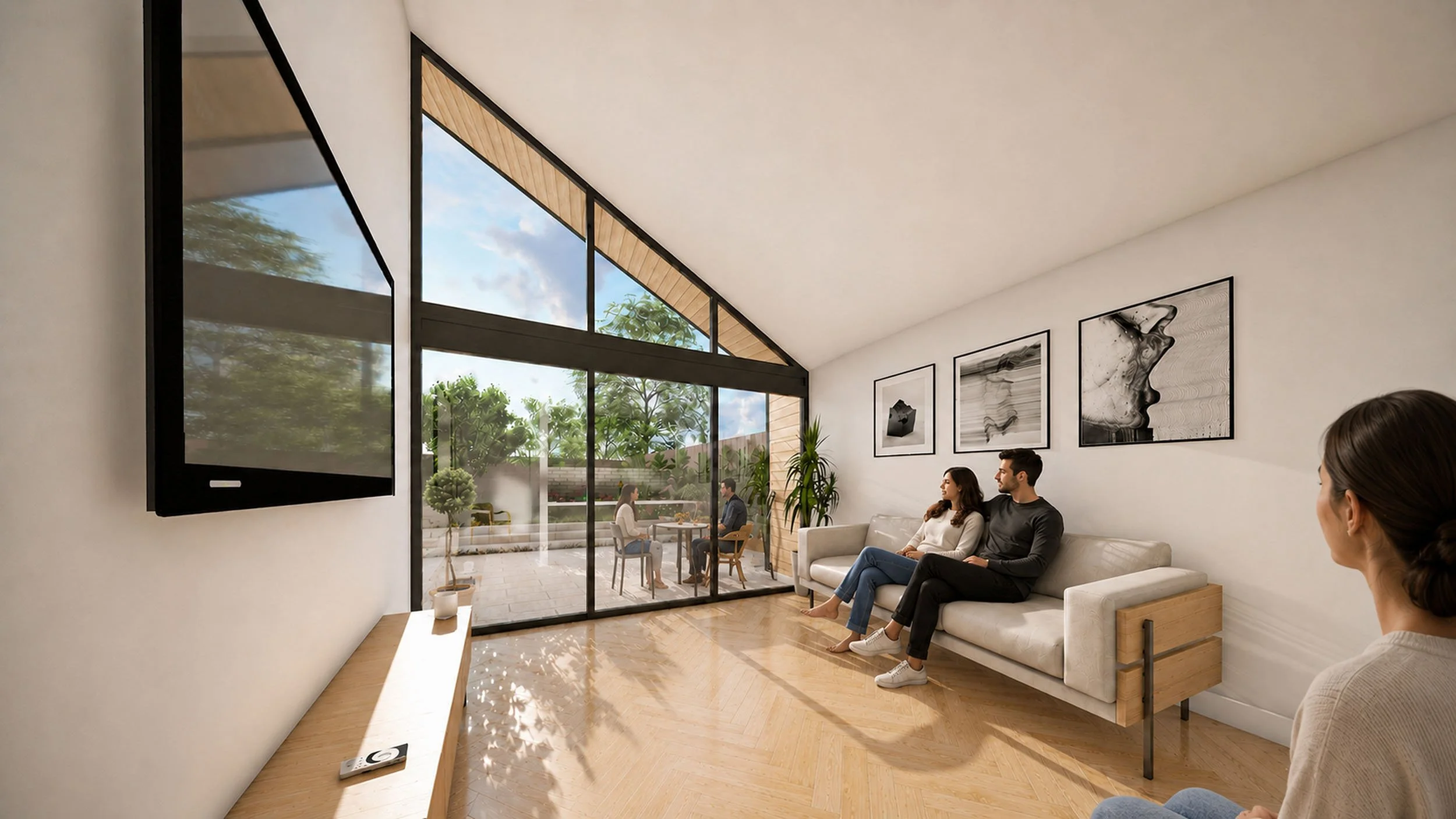
The extension is designed to improve the relationship between the house and its garden. Its main glazed elevation faces back into the plot, bringing light into the new space while maintaining privacy to neighbouring properties.
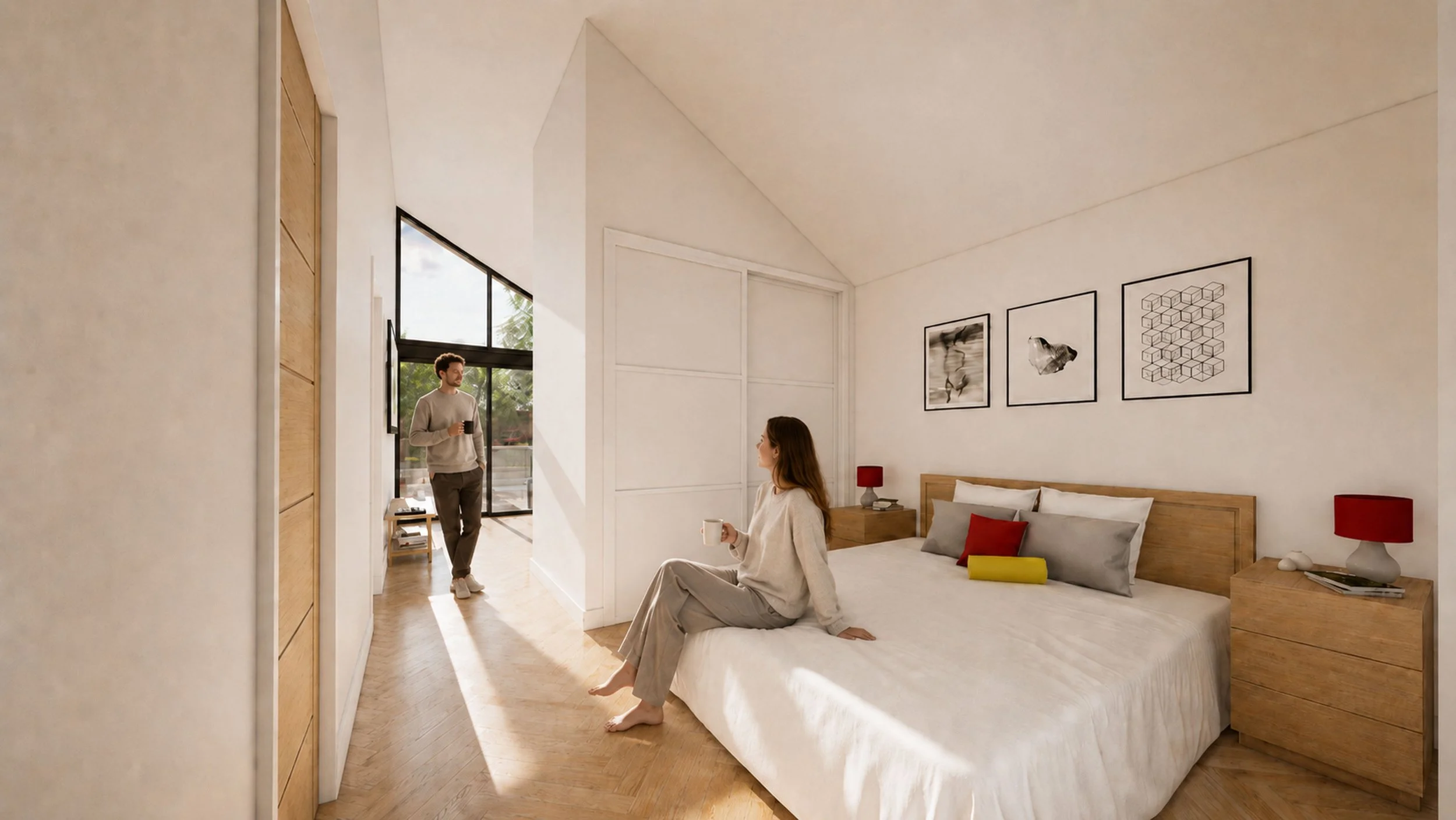
The mono-pitched roof is a key part of the design. It rises to relate to the existing rear annexe before falling towards the boundary, creating a generous internal volume while reducing the apparent height and mass of the extension within the garden, all within the confines of a simple ‘lean-to’ arrangement.
The physical connection to the existing house is deliberately limited. Rather than opening up large areas of traditional masonry, the new accommodation connects through a single existing recess. This allows the extension to function as part of the home while keeping intervention in the original fabric to a minimum.
The existing rear annexe is also upgraded as part of the works, improving its usability and thermal performance.
Contemporary design in a historic setting.
Contemporary additions can sit comfortably within historic places when they are properly considered.
The proposal is modest in scale, located within the private rear garden and secondary to the traditional sandstone house. Its materials are intended to complement the existing building without imitation.
Domestic projects like this play an important role in how conservation areas continue to evolve. They allow existing buildings to remain useful, comfortable and lived in, while protecting the qualities that make these places special.
This proposal aims to do that: retain the contribution of the traditional house to the West End Lanes, focus change in the more altered rear garden context and introduce a carefully scaled contemporary addition that supports the long-term use of the home.
Thoughtful architecture for homes, heritage and managing change.