
Planning permission for a house in Angus.
How are planning decisions made?
Part of our wider work on Self-Build Homes in Angus.
Understanding planning risk at an early stage.
Securing planning permission for a house in Angus is rarely a simple procedural exercise. While national policy provides a framework, decisions are shaped by how proposals respond to their specific context and how planning judgement is applied in practice.
For self-build clients, uncertainty often arises not from a lack of information, but from conflicting advice and assumptions about what policy does — or does not — allow. Understanding how decisions are actually made, and where risk sits, is an important first step.
Planning policy and interpretation in Angus.
Angus has a defined planning framework supported by national policy, but outcomes are not determined by policy wording alone.
In practice, planning officers and committees assess how a proposal relates to its surroundings, whether it reinforces or disrupts established patterns of development, and how impacts are addressed through siting, scale and design.
This means that two sites with similar characteristics can receive different outcomes depending on context and approach.
Why context matters more than rules alone.
Planning permission for a house is rarely secured by ticking boxes. It depends on how well a proposal responds to its setting and demonstrates an understanding of place.
Factors commonly influencing decisions include:
Relationship to existing buildings and settlement patterns
Visual impact on the surrounding landscape
Access, road safety and servicing
Scale, form and siting of the proposed house
Whether the proposal represents a logical and proportionate intervention
Good design does not override policy, but it can help demonstrate that a proposal is appropriate within it.
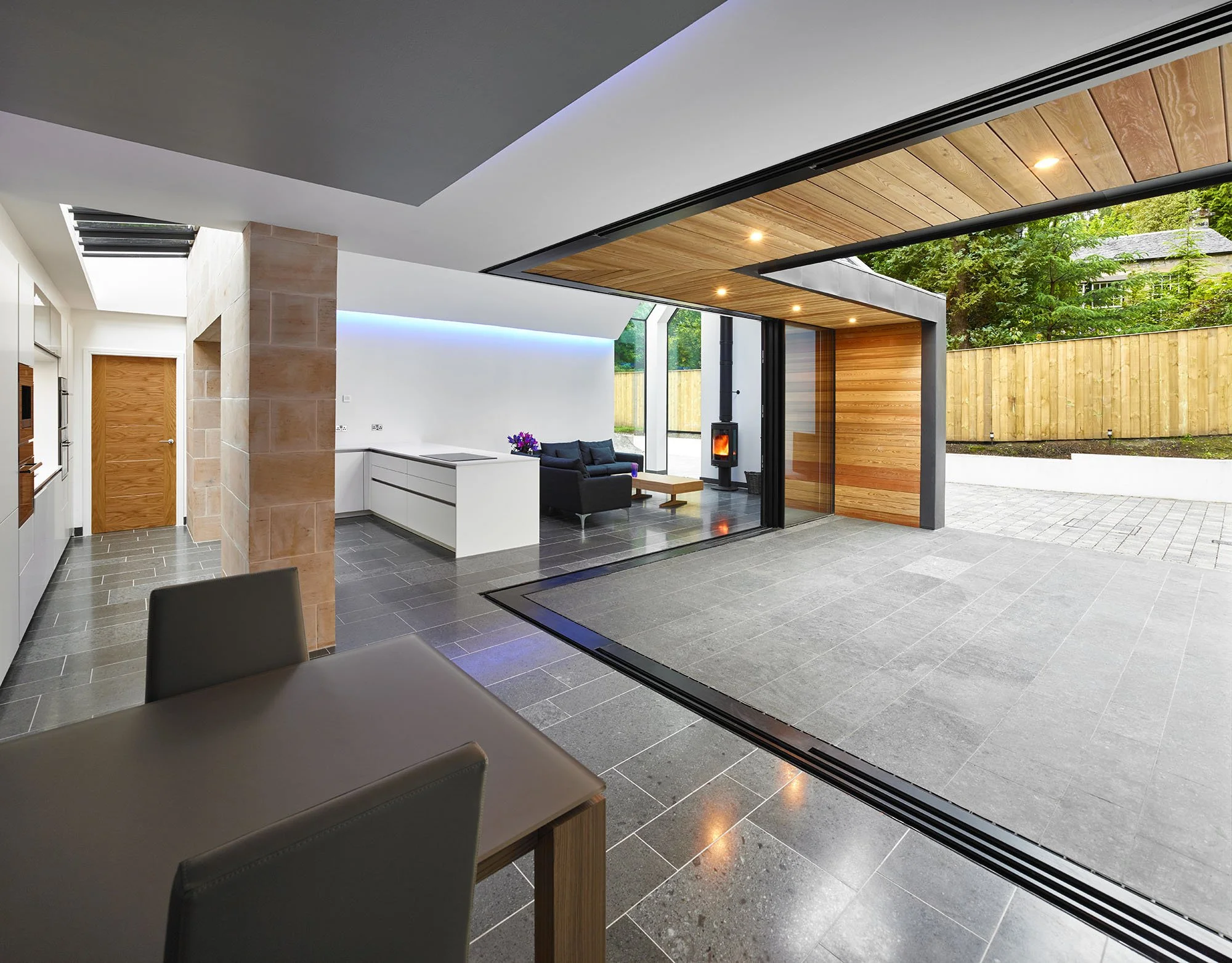
Common reasons applications succeed or fail.
Applications for houses in Angus often succeed when they are grounded in a clear understanding of context and risk from the outset.
Conversely, difficulties commonly arise where:
The principle of development has not been tested early
Sites are assessed in isolation rather than in context
Design decisions are made before planning constraints are understood
Assumptions are carried over from neighbouring approvals without scrutiny
Addressing these issues early can make a significant difference to outcomes.
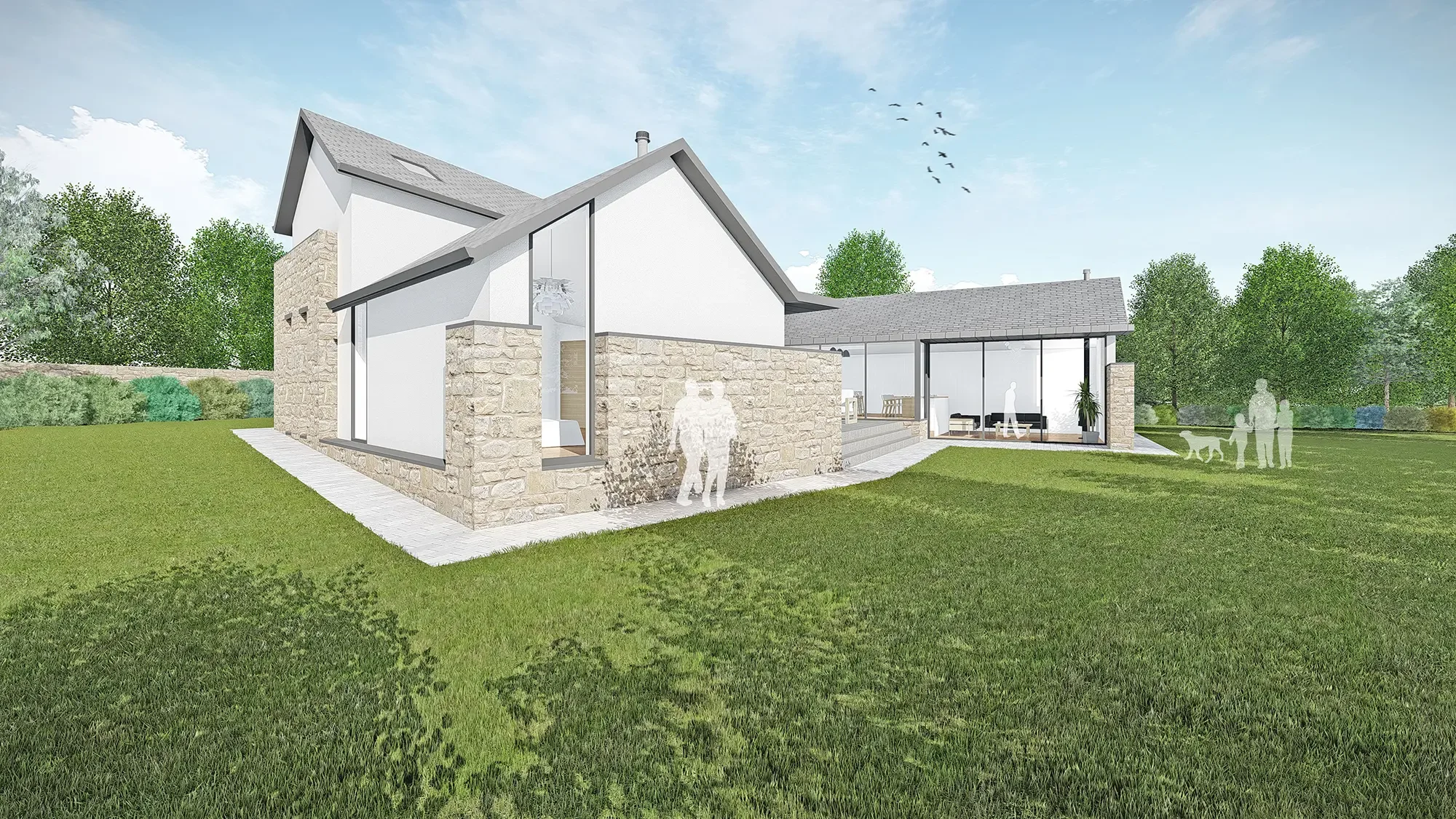
When early advice can reduce risk.
Many self-build clients engage professional advice either too late or only after encountering difficulty. Early planning-led input can help:
Clarify whether development is acceptable in principle.
Identify likely points of concern before submission.
Shape proposals to respond constructively to policy and place.
Reduce the risk of refusal or costly redesign.
At this stage, the aim is not to finalise a design, but to establish a realistic route forward.
Related considerations for self-build projects.
Planning permission is often closely linked to broader questions about land, feasibility and development strategy.
You may also find it helpful to consider:
→ Can I build on my land in Angus?
→ Replacement dwellings in Angus.
A measured approach to planning.
Every site and proposal is different. While policy provides a framework, planning permission for a house in Angus ultimately depends on careful judgement, clarity of thinking and an understanding of how decisions are made in practice.
We work with clients across Scotland to assess planning risk honestly, guide proposals through uncertainty and advise on appropriate next steps when the time is right.
An early, exploratory conversation can often provide clarity — whether that leads to progressing a proposal, revising expectations or pausing altogether. We aim to provide you with clear and supportive advice and routes to achieving your objectives.