CDM2015 : Health & Safety in Domestic Construction


What are the CDM2015 regulations in Scotland?
The Construction (Design and Management) Regulations 2015 (CDM2015) are regulations in Scotland that apply to all construction projects, regardless of size or duration. They place a legal duty on certain individuals and organisations involved in construction projects to manage risks related to health and safety.
The regulations are designed to ensure that health and safety is considered throughout the entire construction process, from design and planning to construction and maintenance. The key individuals and organisations that have legal responsibilities under CDM2015 include the Client, the Principal Designer and the Principal Contractor.
You can find out more about the CDM2015 regulations on the Health & Safety Executive website.
When did the CDM2015 regulations come into force?
CDM2015 came into force in the UK on April 6, 2015. They replaced the CDM 2007 Regulations, with the most fundamental updates being the introduction of the roles of Principal Designer, Principal Contractor and the application of the regulations to domestic projects.
Do the CDM2015 regulations apply to domestic projects?
Yes, CDM2015 applies to all construction projects, including domestic projects, regardless of their size or duration, provided there is more than a single trade involved. This means that the regulations apply to any construction work carried out on a domestic property, including new builds, renovations, extensions, and conversions. Believe it or not, the regulations even apply to small-scale projects such as installing a new kitchen or bathroom, or building a garden wall, if they involve more than a single trade.
The regulations require that a Principal Designer and a Principal Contractor are appointed for any domestic project, and that adequate information is provided to the Principal Designer and Principal Contractor about the property, including any known hazards or risks, and that the work is carried out in a way that does not put the health and safety of anyone affected by the work at risk.
What do the CDM2015 regulations mean for domestic clients?
CDM2015 places a legal duty on domestic clients to ensure that health and safety is considered throughout the construction process of any projects they commission on their property. For domestic clients, this means that they have a legal responsibility to appoint a Principal Designer and Principal Contractor when undertaking any construction work on their property, regardless of the size of the project, if it involves more than a single trade.
In practice, this means that domestic clients should ensure that they appoint a reputable and qualified person to act as the Principal Designer during the pre-construction phase and Principal Contractor to manage the construction phase, and that they work closely with them to ensure that all necessary health and safety precautions are taken throughout the project. Clients should also be aware of their responsibilities under the regulations, and take steps to ensure that they are met.
When do the CDM2015 regulations apply on a domestic project?
CDM2015 applies to all construction projects, including domestic projects, regardless of their size or duration if they involve more than a single trade. The regulations apply to any construction work carried out on a domestic property. Whilst the application to very small projects such as kitchen refurbishments has questioned the realism of this regulatory approach, it is easy to understand the overarching objective in regulation. Health and safety is paramount! There is no excuse on any project for failure to manage it appropriately.
You can view the CDM2015 legislation on the Government website here.
What are the Clients responsibilities on a domestic project under CDM2015?
On all projects, under the CDM2015 Regulations, Clients must:
Appoint people or organisations with sufficient skills, knowledge and experience to undertake the works safely.
Ensure appointments are made early on in the process, to ensure they are effective.
Make suitable arrangements for managing the project and review these arrangements as required.
Ensure suitable time and resources are allocated for each stage of the project.
Be satisfied that suitable welfare facilities are provided throughout the construction phase.
Provide the required Pre-Construction Information, prepared by the Principal Designer, to all parties.
Ensure a suitable construction phase plan is drawn up by the Principal Contractor prior to starting the works.
Notify HSE if the project will last longer than 30 days with 20 or more operatives or 500 person days.
On projects where there is likely to be more than one contractor on site you must also:
Appoint in writing, a ‘Principal Designer’ to plan, manage and monitor the pre-construction phase.
Appoint in writing a ‘Principal Contractor’ to plan, manage and monitor the construction phase.
Ensure that the Principal Designer and Principal Contractor comply with their duties.
Ensure that the Principal Designer or Principal Contractor prepares a Health and Safety File for the project.
Keep the H&S file and make in available to any person who may need it in the future.
The regulations mostly require Clients to ensure that a number of things are carried out, rather than to do them yourself. The primary requirements are for Clients to ensure appointment of a Principal Designer and Principal Contractor and that those appointments are recorded in writing.

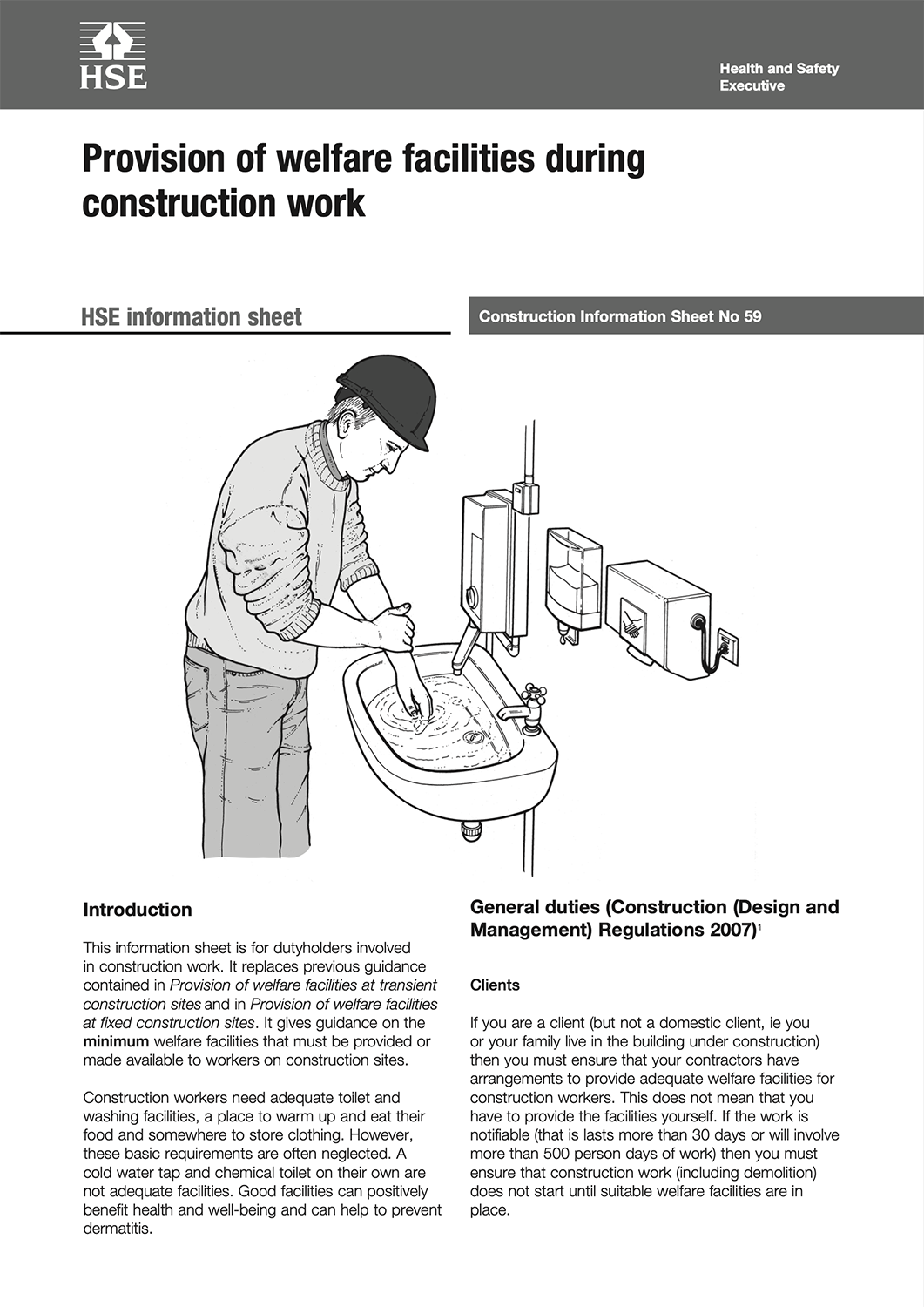
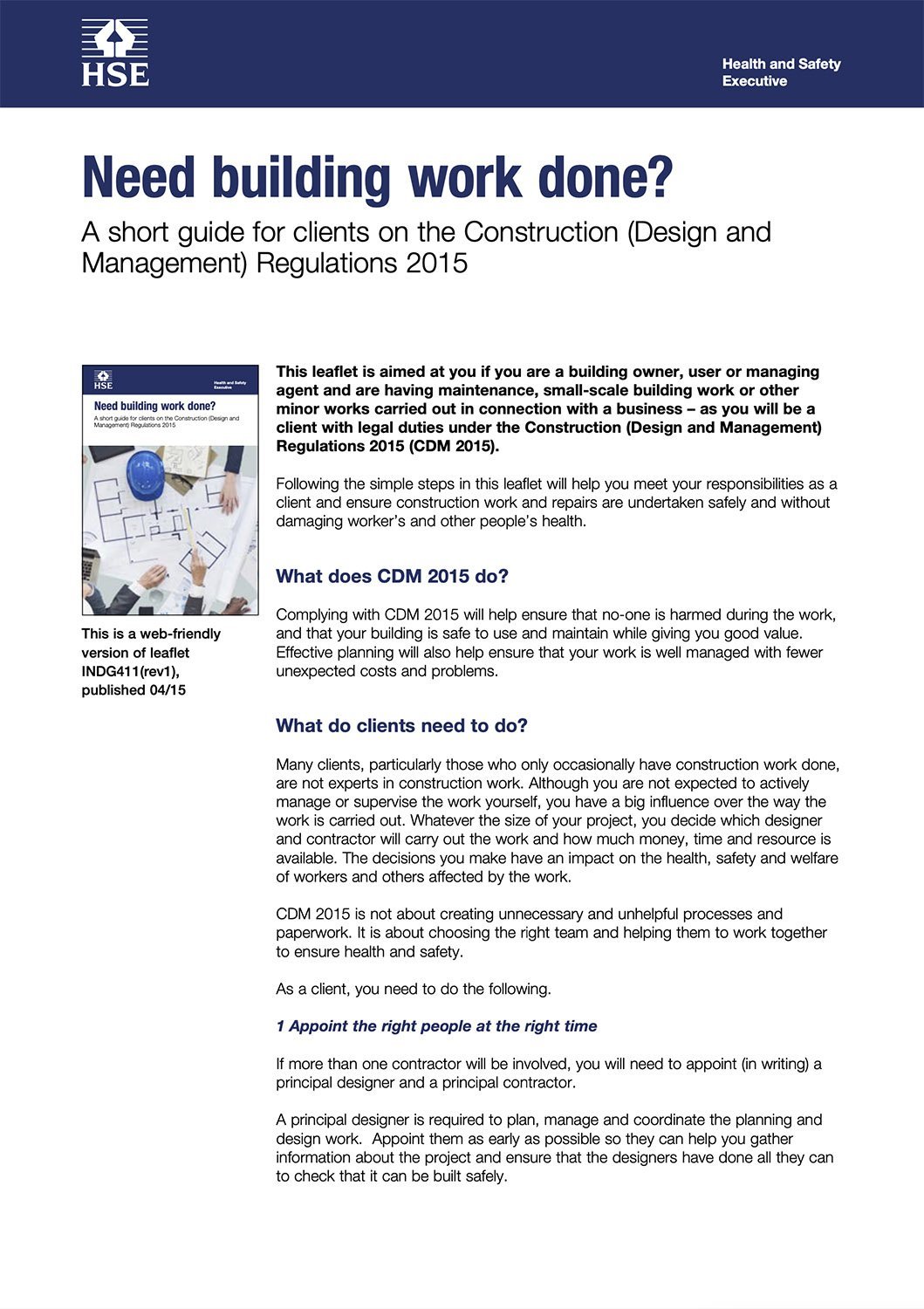
Download further info from HSE by clicking images above.
What are the responsibilities of the Principal Designer in CDM2015 on domestic projects?
The Principal Designer is responsible for planning, managing, monitoring and coordinating health and safety in the pre-construction phase of a project. Specifically, the responsibilities of the Principal Designer CDM2015 include:
Identifying, eliminating or controlling foreseeable risks: The Principal Designer must ensure that all foreseeable risks related to health and safety are identified, eliminated or controlled during the pre-construction phase of the project.
Preparing the Pre-Construction Information: The Principal Designer must prepare a Pre-Construction Information, which includes the project's objectives, the proposed design and how it will be managed during the construction phase.
Coordinating design: The Principal Designer must coordinate the design of the project to ensure that it is safe and that the design risks are eliminated or controlled.
Collaborating with other designers and contractors: The Principal Designer must collaborate with other designers and contractors involved in the project to ensure that health and safety is considered throughout the design process.
Provide information to the Principal Contractor: The Principal Designer must provide the Principal Contractor with the pre-construction information and any other information necessary to enable the Principal Contractor to plan and manage the construction phase safely.
Advise the Client: The Principal Designer must advise the Client of their responsibilities, provide the client with the pre-construction information and ensure that the client has reviewed and approved it.
Maintain records: The Principal Designer must keep records of the steps taken to comply with the regulations, and make them available upon request.
The Principal Designer's fundamental responsibility is to ensure that health and safety is considered throughout the pre-construction phase of the project, and that all necessary precautions are taken to protect the health and safety of all those involved in the project.
What are the responsibilities of the Principal Contractor under CDM2015 on domestic projects?
The Principal Contractor is responsible for planning, managing, monitoring and coordinating health and safety in the construction phase of a project, including domestic projects. Specifically, the responsibilities of the Principal Contractor under the CDM2015 Regulations include:
Planning the construction phase: The Principal Contractor must plan the construction phase to ensure that it is carried out safely and that all foreseeable risks related to health and safety are eliminated or controlled.
Managing the construction phase: The Principal Contractor must manage the construction phase to ensure that it is carried out in accordance with the plan and that all necessary precautions are taken to protect the health and safety of all those involved in the project.
Monitoring the construction phase: The Principal Contractor must monitor the construction phase to ensure that it is being carried out in accordance with the plan and that all necessary precautions are being taken to protect the health and safety of all those involved in the project.
Coordinate with other contractors: The Principal Contractor must coordinate with other contractors involved in the project to ensure that health and safety is considered throughout the construction phase.
Prepare the Health and Safety File: The Principal Contractor must prepare a health and safety file containing all relevant information about the project, including the risk assessments and method statements.
Provide information to the Client: The Principal Contractor must provide the client with the health and safety file and any other information necessary to enable the client to comply with their responsibilities under the regulations.
Make information available: The Principal Contractor must keep records of the steps taken to comply with the regulations, and make them available upon request.
Notify the Health and Safety Executive: The Principal Contractor must notify the HSE if the project becomes notifiable at any stage during the works.
The Principal Contractor's responsibility is to ensure that health and safety is considered throughout the construction phase of the project, and that all necessary precautions are taken to protect the health and safety of people who are involved with, or come into contact with the project works.

Award winning new dwelling in conservation area.

Glass box extension to listed home.

Award winning new dwelling in conservation area.
Who is responsible for the preparation of the Construction Phase Plan in CDM2015?
The Principal Contractor is responsible for the preparation of the Construction Phase Plan. The Construction Phase Plan sets out the way in which the construction phase of the project will be managed and how health and safety will be considered and controlled during the construction works.
The Construction Phase Plan should be prepared before the construction phase begins and should be based on the pre-construction information provided by the Principal Designer. It should be reviewed and approved by the client. It should be made available to all parties involved in the construction phase, including the Principal Contractor, any other contractors and the workers on site. The Construction Phase Plan should be reviewed and updated as necessary throughout the construction phase.
The Construction Phase Plan should cover the following areas:
The organisation, planning and management of the construction phase.
The resources, duties and responsibilities for the health and safety during the construction phase.
The procedures to be followed to ensure that the construction work is carried out safely and without risks to health and safety.
The emergency procedures to be followed in the event of an emergency.
The arrangements for monitoring the construction work and taking action to ensure that it is carried out safely.
The arrangements for monitoring the health and safety performance of the project.
The arrangements for the handover of the completed project.
Who is responsible for preparation of the Health and Safety file at completion of the works?
The Principal Contractor is responsible for preparing a health and safety file at the completion of the works under the CDM2015 Regulations. The health and safety file contains all relevant information about the project, including the risk assessments and method statements, it should be provided to the client.
The client must keep the health and safety file as long as it is needed to ensure the ongoing safety of the building and its users. This can be for the life of the building or until the building is demolished.
The Principal Contractor should also update the health and safety file as necessary, such as if there are changes made to the building, or if new information becomes available that affects the safety of the building. This will help the client to comply with their responsibilities under the regulations and ensure that the health and safety of the building is maintained throughout its life.
You can view a summary of the respective parties duties under CDM2015 Regulations here.
Do the CDM regulations require asbestos surveys to be carried out on domestic projects?
Yes, the CDM2015 Regulations require that an asbestos survey be carried out on all domestic projects if the existing building was built before the year 2000. This is irrespective of whether the Client feels there is no asbestos present or any cost associated with procuring such a survey. The regulations require that a ‘Refurbishment and Demolition’ survey (formerly known as a Type 3 Survey) is carried out prior to works commencing on site. Asbestos is a hazardous material that was widely used in construction before the year 2000, and it can be found in a variety of building materials such as insulation, floor and ceiling tiles, and roofing.
The regulations require that a client must ensure that all necessary information about the building is provided to the Principal Designer, including information about the presence of asbestos and any other hazardous materials.
It is important to note that if asbestos is found on a domestic project, it must be handled and removed by a licensed contractor and in accordance with the Control of Asbestos Regulations. Failure to comply with the regulations can result in fines and penalties, as well as putting the health of workers and building users at risk.
Whilst this can be frustrating for domestic Clients particularly, the short answer is that any property constructed prior to the year 2000 must have an asbestos refurbishment and demolition survey carried out prior to works commencing on site.
Related Information | Architect Dundee
Architectural services for private homes.
Self-Build Homes – Guidance and inspiration for designing and building your own home in Dundee.
Extensions – Explore our advice and case studies on home extensions.
Dundee Conservation Areas – Learn more about Dundee’s Conservation Areas.
Building contracts in self build and home extension projects.